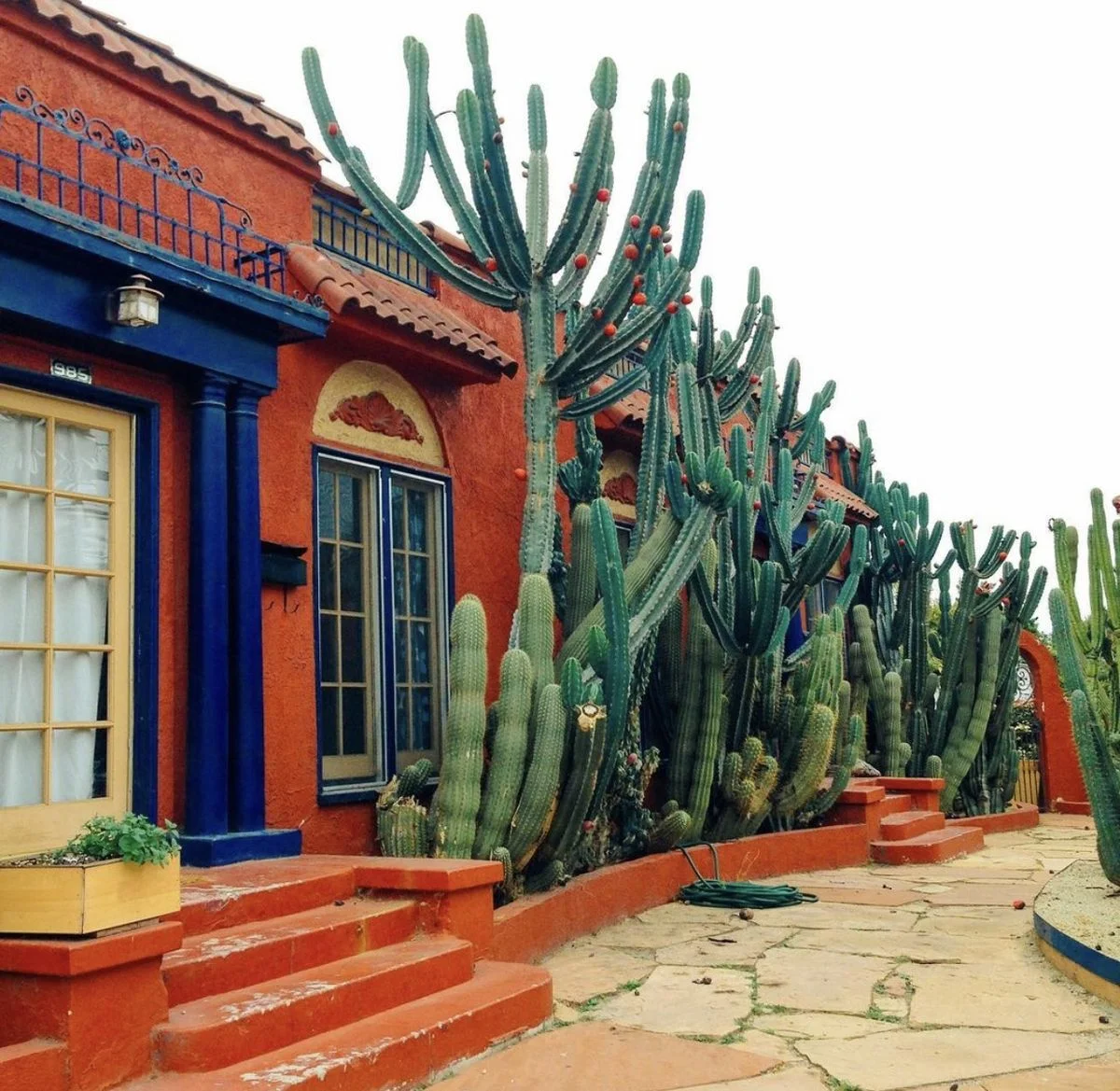
Los Angeles Cactus installs succulents for homeowners across Los Angeles County, Kern County and beyond: front-yard conversions, parkway strips, slope banks, courtyard beds and containers. No job is too small or too large, and veteran and senior discounts are available.
Choosing succulents for your microclimate
Succulents vary more than people expect. Soft echeverias and many aeoniums love mild coastal air but sulk in inland heat. Many aloes handle both. Hardy agaves and some sedums tolerate desert cold that would kill coastal favorites. A garden in Santa Monica, one in Pomona and one in Lancaster should not share a plant list. Installation begins with sun, shade, frost and wind, then builds a palette that will still look good in its third summer.
Color is part of the appeal. Many succulents blush red, orange or purple when they receive strong light or cool nights, and fade to green in shade. Planting with that in mind, by putting the most colorful varieties where they will get bright morning sun, lets a bed change gently through the seasons instead of looking the same all year.
Light changes through the year, too. A bed that sits in full sun in July may be shaded by a house in December. Watching how light moves across the space, or sharing photos at different times of day, leads to better choices.
Beds, slopes and containers
Ground beds are built around drainage, often with amended or mounded soil and a gravel or decomposed granite top dressing. Slope banks benefit from groundcover succulents that knit together, combined with larger accents for structure, and are planted so they can be reached safely later. Parkway and front strips favor low, soft, spineless plants that tolerate foot traffic nearby. Containers are ideal for patios, balconies and small coastal lots, and they let you grow plants that might not suit your native soil.
Replacing a lawn with succulents
Lawn conversions are among the most satisfying projects. The turf is removed, irrigation is rethought, soil is shaped for drainage and the new planting is laid out with paths and breathing room. Mixing a few larger accent plants with groundcovers and gravel creates structure on day one, while smaller plants fill in over the following seasons. Before starting, check any city or association requirements for front yards and parkways.
Water, establishment and care
Succulents need some water to establish, then far less. New plantings are usually watered deeply but infrequently, letting soil dry between. Existing irrigation is adjusted to match, because sprinklers built for lawn will drown a succulent bed. Over time, care mostly means removing spent flower stalks, dividing clumps that crowd and refreshing top dressing. Thoughtful spacing at the start keeps that work light.